
Types of Silverfish in the UK: Common vs Long-Tailed Silverfish
More than one type of silverfish may be found indoors in the UK. The two most relevant household species are the common silverfish and the long-tailed silverfish, sometimes called the grey silverfish.
They can look similar at first glance, but their size, body shape, preferred conditions and behaviour are different. Correct identification can help you understand where to inspect and which environmental conditions may be supporting their presence.
Common Silverfish vs Long-Tailed Silverfish
| Feature | Common silverfish | Long-tailed silverfish |
|---|---|---|
| Scientific name | Lepisma saccharina | Ctenolepisma longicaudata |
| Typical appearance | Smooth, silver-grey body | Grey or mottled body with more visible bristles |
| Body length | Usually smaller | Usually larger and more elongated |
| Tail filaments | Shorter in proportion to the body | Long and clearly visible |
| Preferred conditions | More strongly associated with humid areas | Can tolerate drier indoor conditions |
| Common locations | Bathrooms, kitchens, utility rooms and damp storage areas | Bedrooms, living rooms, offices, lofts, storage spaces and wider parts of buildings |
Common Silverfish (Lepisma saccharina)
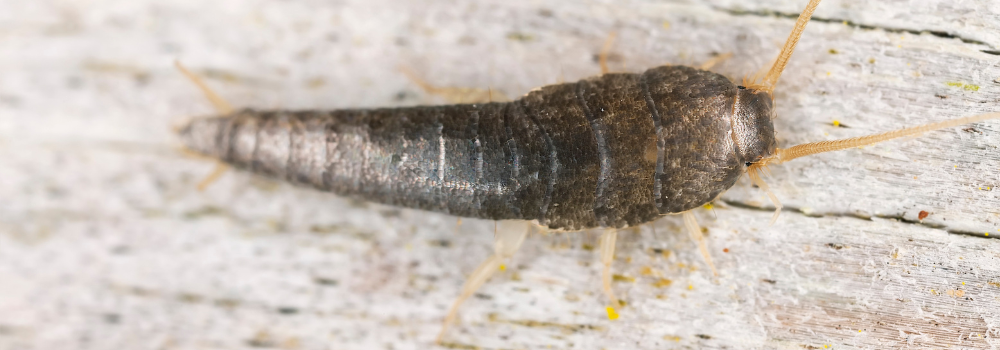
The common silverfish has a tapered, silver-grey body, long antennae and three tail-like filaments. It is usually associated with damp, humid and concealed indoor areas.
Common locations include:
- bathrooms
- kitchens
- utility rooms
- cellars
- areas near leaking pipes or condensation
Common silverfish feed on materials containing starch, cellulose, adhesives and organic residues. These may include paper, cardboard, wallpaper paste, dust and food debris.
Long-Tailed Silverfish (Ctenolepisma longicaudata)
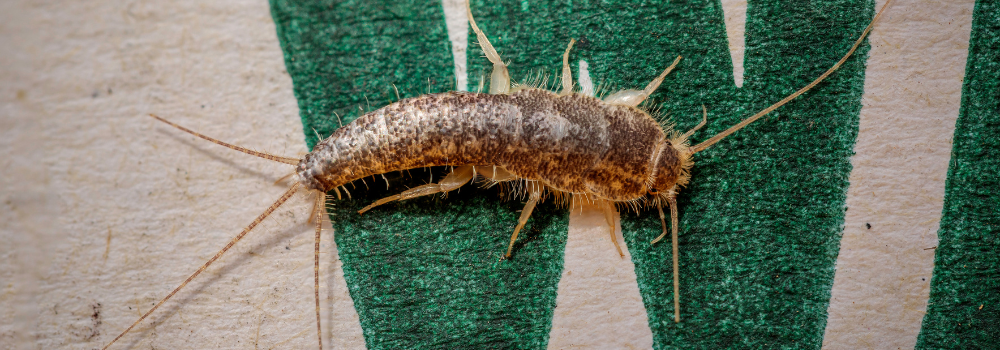
The long-tailed silverfish is usually larger, more elongated and more visibly bristled than the common silverfish. Its antennae and tail filaments are also longer in proportion to its body.
Unlike common silverfish, long-tailed silverfish can tolerate drier indoor environments. This means they may be found throughout a building rather than only in humid rooms.
Possible locations include:
- bedrooms and living rooms
- offices and libraries
- lofts and storage areas
- behind skirting boards
- inside cardboard packaging
- around books, papers and stored materials
How to Tell the Difference
Look at the following features:
- Body size: long-tailed silverfish are usually larger.
- Tail length: the rear filaments are noticeably longer on long-tailed silverfish.
- Body texture: long-tailed silverfish often appear more mottled and bristled.
- Location: common silverfish are more strongly linked to humid rooms, while long-tailed silverfish may appear in drier rooms.
- Distribution: repeated sightings across several rooms may be more consistent with long-tailed silverfish.
Visual identification is not always certain, particularly when an insect is moving, damaged or only partly visible.
Does the Species Change What You Should Check?
Yes. Species identification can help guide your inspection.
If common silverfish are present, check:
- leaks and condensation
- bathroom and kitchen humidity
- damp walls and pipework
- poor ventilation
If long-tailed silverfish are present, also inspect:
- cardboard boxes
- books and paper storage
- lofts and dry storage rooms
- bedrooms and living spaces
- gaps behind skirting boards and furniture
How Monitoring Traps Can Help With Identification
Adhesive monitoring traps can help show where silverfish are moving and whether activity is limited to one room or spread across several areas.
Place traps only in locations supported by the product instructions, such as near skirting boards, behind furniture or close to areas where silverfish have been seen.
View the silverfish monitoring trap for product-specific placement and replacement guidance.
What to Do After Identifying the Species
Once you have identified the likely species, focus on the conditions supporting the activity.
- check for moisture and leaks
- improve ventilation where practical
- vacuum cracks, edges and concealed areas
- remove unnecessary cardboard and paper clutter
- store suitable items in clean, closed containers
- continue monitoring affected areas
For broader household guidance, read our whole-home silverfish guide.
For wardrobe-specific advice, read Silverfish in Your Wardrobe: Signs, Clothes Damage and What to Do.
Frequently Asked Questions
How many types of silverfish are found in the UK?
Several related species may occur, but common silverfish and long-tailed silverfish are among the most relevant indoor species for UK households.
What is the difference between grey silverfish and common silverfish?
Grey silverfish usually refers to the long-tailed silverfish. It is generally larger, more visibly bristled and better able to live in drier indoor environments.
Which silverfish is larger?
Long-tailed silverfish are generally larger and have longer antennae and tail filaments than common silverfish.
Can long-tailed silverfish live in bedrooms?
Yes. Because they tolerate drier conditions, long-tailed silverfish may be found in bedrooms, living rooms, offices and storage spaces.
Are common silverfish only found in bathrooms?
No. They may also occur in kitchens, utility rooms, cellars and other humid areas, although bathrooms are one of their more common locations.
Does identifying the species matter?
Yes. It can help indicate whether the main issue is likely to involve humidity and damp, or whether inspection should also extend to drier rooms, cardboard, books and wider storage areas.
For questions about bites, diet and household risk, see our silverfish FAQ.
Sources and Further Reading
- A revised checklist of UK silverfish
- English Heritage: Silverfish and grey silverfish fact sheet
- NC State Extension: Silverfish and firebrats
Originally published 30 August 2022. Last reviewed and updated July 2026.